
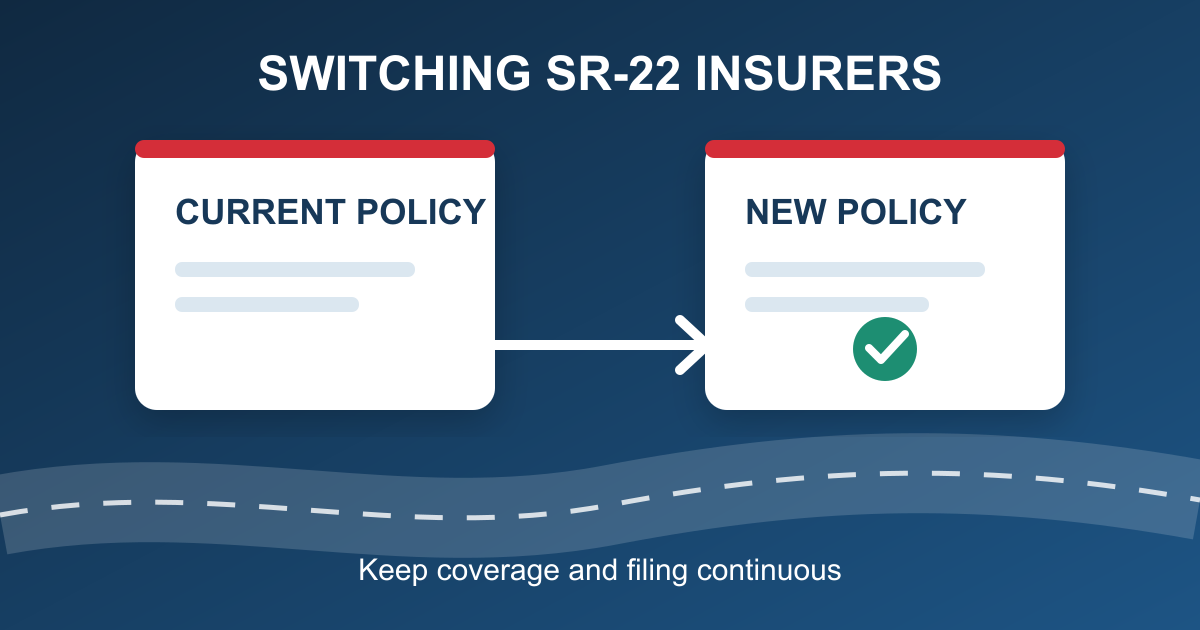
Changing insurers can save money, but an SR-22 requirement makes the timing important. A new auto policy alone may not be enough: the state that required your filing must also receive acceptable proof from the new insurer. The safest sequence is to arrange the replacement policy and filing before ending the old one.
Why the filing matters when you switch
An SR-22 is a certificate of financial responsibility filed by an insurer; it is not a separate policy you can move by itself. If your old policy or filing ends before the replacement is in place, your driving privileges may be affected. For example, the California DMV tells drivers to make sure new proof is on file before canceling an old policy. Illinois says an insurer reports an SR-22 cancellation and that the resulting suspension remains until a filing is reinstated, according to the Illinois Secretary of State.
A practical switching checklist
- Check the notice from your state. Confirm which state requires the SR-22, what type of policy or certificate applies, and how long the requirement remains. Do not assume that another state's rules apply to your record.
- Compare replacement coverage using the same facts. Give each agent accurate driver, vehicle, address, and coverage information. Ask whether the proposed insurer can file the SR-22 for the state that requires it, and compare policy limits and total costs—not only the first payment.
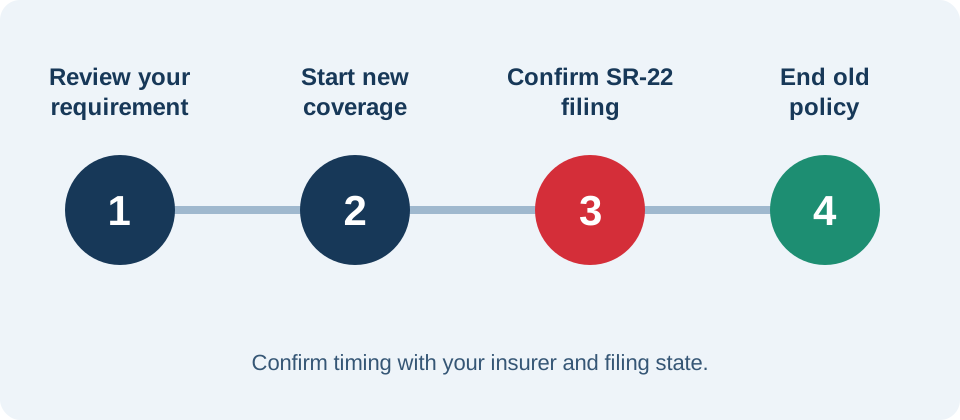
- Coordinate effective dates and filing. Ask the new insurer when coverage begins and when it will submit the filing. Keep the old policy active until you have confirmation that the replacement coverage and filing are in place. State processing times can vary.
- Check your state record. Keep the new policy documents and filing confirmation, and use the state's official status service or contact the agency if the record does not update as expected. Only then coordinate the old policy's end date.
What if you no longer own a car?
Tell the agent before changing coverage. Some states allow an operator or non-owner form of SR-22 for a driver who does not own a vehicle; others have different forms and eligibility rules. Illinois, for example, describes separate operator, owner, and operator-owner certificates on its official SR-22 page. Our non-owner SR-22 guide explains the insurance side, but your filing state decides what it will accept.
Let us compare the transition, not just the price
The Car Insurance Guy can compare carriers for your situation and help coordinate an SR-22 filing. We cannot promise the lowest price or control when a state updates its records. If you are thinking about switching, bring your current policy's end date and the state's notice to the conversation. Tell us what you need, or start with our SR-22 insurance overview.